Cycling Tracker App
A cycling tracker app helps you record cycling distance, monitor riding activity and understand your progress over time. Whether you cycle for commuting, recreation or fitness, explore how cycling tracking works and how ACTIVITY App supports everyday movement.
Download Now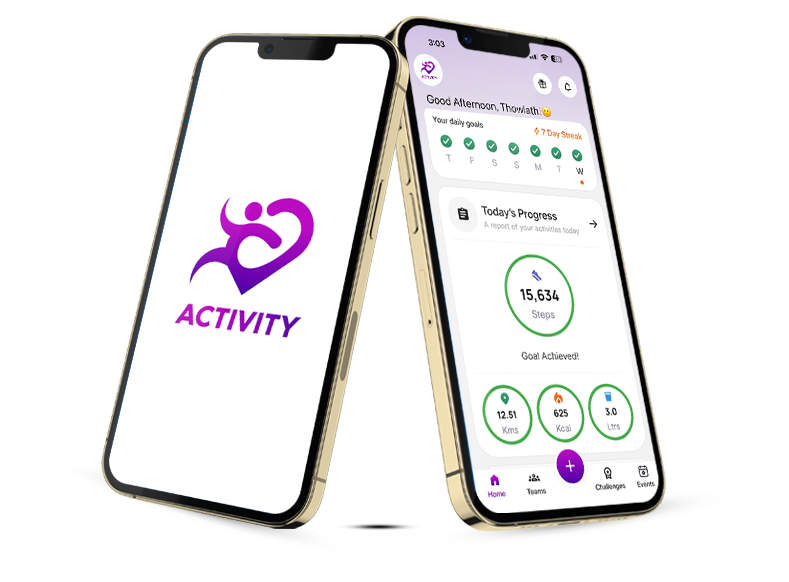
What Is a Cycling Tracker App?
A cycling tracker app is a mobile application designed to record cycling activities and display information about completed rides. Depending on its features, it may measure cycling distance, ride duration, average speed, estimated calories burned and other cycling-related information.
Cycling trackers are useful for recreational cyclists, daily commuters, beginners and people who want to understand their riding patterns.
Some applications focus on detailed cycling performance, while others include cycling as part of general physical activity tracking.
ACTIVITY App supports cycling within its everyday activity experience, alongside walking and running. It also provides goals, fitness challenges and community features that encourage regular movement.
How Does a Cycling Tracker App Work?
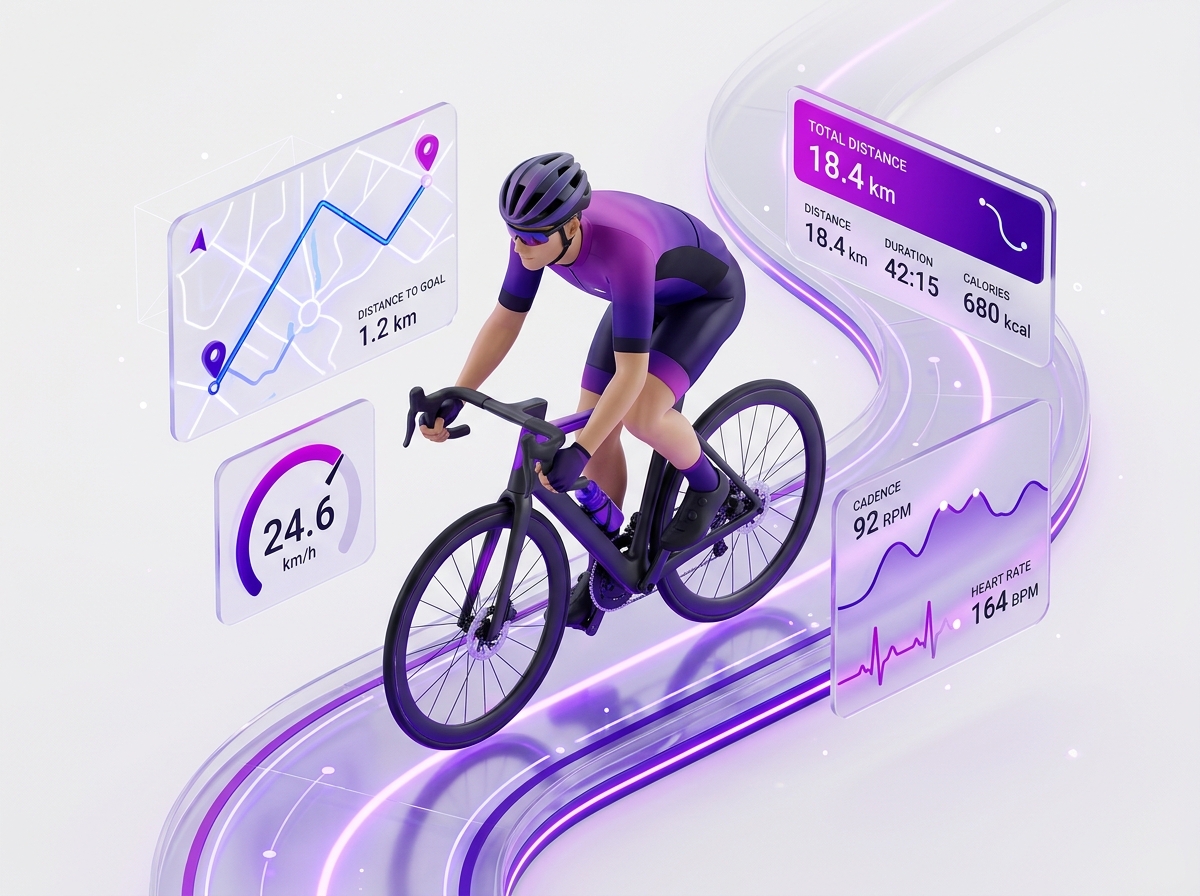
Cycling tracker apps use GPS, smartphone sensors or compatible cycling devices to collect information during a ride.
GPS-enabled applications can estimate distance by recording changes in location as a cyclist moves.
Other systems may use connected bicycle sensors or activity information from compatible devices.
A typical cycling tracking process involves:
Starting an activity:
Select or begin a cycling session when required by the app.
Recording movement:
The tracking system collects supported ride information.
Measuring distance:
GPS or compatible equipment estimates the distance travelled.
Reviewing results:
The app displays available measurements and progress information.
Tracking methods vary between applications. A general activity app may provide fewer cycling-specific measurements than a dedicated GPS cycling computer.
ACTIVITY App includes cycling among its supported activities, although the availability of individual cycling measurements depends on its current tracking features.
What Can You Track With a Cycling Distance Tracker?
Cycling tracking applications provide different measurements depending on the device and software.
| Cycling metric | What it tells you |
|---|---|
| Cycling distance | Total kilometres covered during a ride |
| Ride duration | Time spent completing the cycling activity |
| Average speed | Approximate distance travelled per hour |
| Cycling frequency | How often you complete rides |
| Estimated calories burned | Approximate energy expenditure |
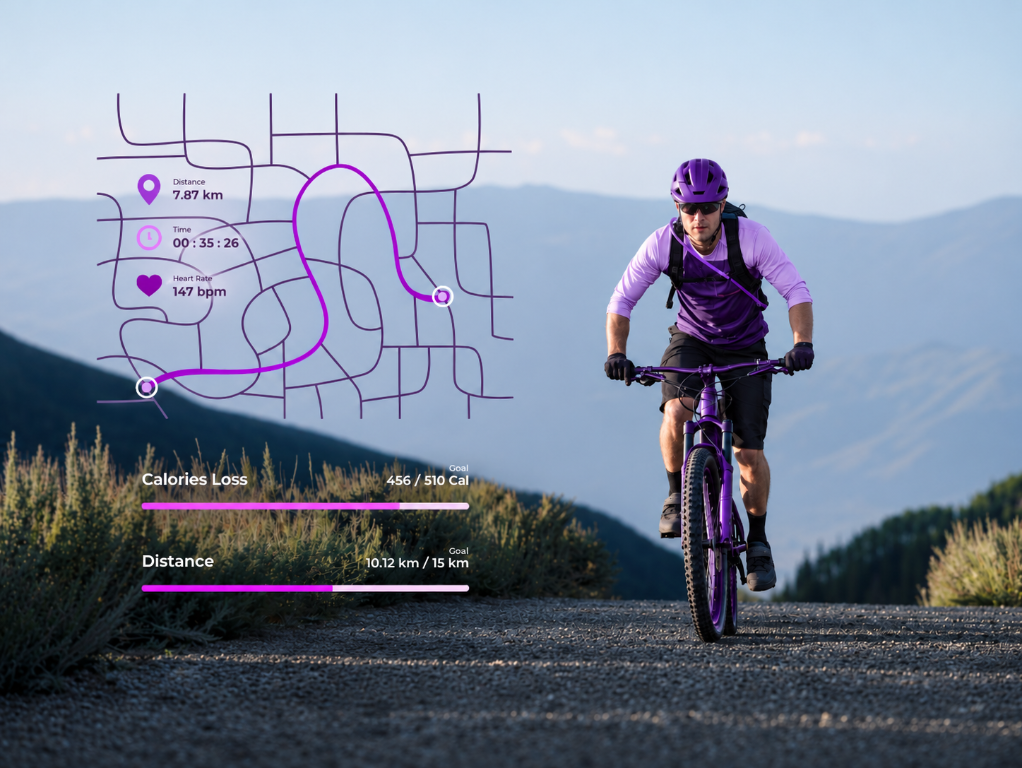
| Route information | The path travelled, when GPS mapping is supported |
| Activity history | Previously recorded cycling activities |
Not every cycling tracker includes all these measurements.
A basic cycling distance tracker may focus on kilometres covered, while a dedicated cycling computer may offer speed, elevation, cadence and performance analysis.
The right measurements depend on whether you cycle casually, commute regularly or follow structured cycling training.
How Is Cycling Distance Measured?
Cycling distance represents the total ground covered during a ride, generally expressed in kilometres.
Different tracking systems calculate this distance using different methods.
GPS-based distance tracking
GPS-enabled devices estimate the route travelled using location information. This method is commonly used for outdoor cycling, although accuracy can vary with signal conditions.
Bicycle wheel sensors
Some dedicated cycling devices calculate distance using wheel rotations and the configured wheel circumference.
Connected fitness devices
Compatible smartwatches or cycling computers may record and share distance information with supported applications.
Cycling distance should not be calculated simply by counting walking steps. Cycling involves a different movement pattern and phone step counters may not reliably represent pedalling activity.
ACTIVITY App's official website includes cycling among its supported activities.
Users should check the app's current cycling interface to confirm which distance measurement and recording options are available.
Understanding Cycling Speed, Distance and Duration
Cycling distance, speed and duration describe different aspects of a ride.
Distance refers to the kilometres travelled. Duration indicates how long the activity lasted.
Average speed represents the distance covered divided by the elapsed time used in the calculation.
For example, a cyclist travelling 12 kilometres in 40 minutes has an average speed of 18 km/h.
| Distance | Duration | Average speed |
|---|---|---|
| 5 km | 20 minutes | 15 km/h |
| 10 km | 40 minutes | 15 km/h |
| 15 km | 60 minutes | 15 km/h |
These examples are illustrative rather than recommended speed targets.
Average cycling speed varies according to traffic, road surfaces, terrain, wind and the type of bicycle.
Applications may also calculate moving time differently from total elapsed time, so results should be compared carefully.
How to Track Your Daily Cycling Routine
A cycling tracker can help organise information about regular rides without requiring a complicated training programme.
Begin with familiar routes
Choose a route that matches your experience and local riding conditions.
Record your cycling activity
Use a suitable tracking method to capture available ride measurements.
Review the distance
Check the approximate kilometres covered and the time taken.
Observe your routine
Notice how cycling fits into your weekdays, weekends or commuting schedule.
Compare similar rides
Review rides completed under similar conditions to understand changes over time.
Adjust your goals
Choose manageable distance or frequency targets based on your abilities. ACTIVITY App can be part of a broader activity routine for users who combine cycling with other everyday movement.
The objective is to make cycling records useful rather than constantly monitoring numbers during a ride.
How Can Cycling Tracking Help Daily Commuters?
Cycling is not limited to recreational or fitness activities. Many people use bicycles for commuting and short-distance travel.
A cycling tracker can help commuters understand how much riding forms part of their regular routine.
For example, someone cycling 4 kilometres to work and 4 kilometres home completes approximately 8 kilometres of travel during the day.
Over five commuting days, that represents around 40 kilometres.
Recording these distances can help individuals understand their travel patterns and evaluate how frequently they use their bicycles.
Commuters may also find it useful to compare routes based on travel time, road conditions and convenience.
However, route safety should always take priority over shorter distances or faster travel times.
Outdoor Cycling vs Indoor Cycling Tracking
Outdoor and indoor cycling require different measurement methods.
| Feature | Outdoor cycling | Indoor cycling |
|---|---|---|
| Location | Roads, cycling paths or trails | Indoor cycling equipment |
| Distance | Often GPS or wheel sensors | Equipment or compatible sensors |
| Speed | GPS or cycling sensors | Equipment estimates |
| Route records | Available on supported GPS apps | Generally not applicable |
| Environmental conditions | Traffic, wind and terrain | Controlled environment |
| Tracking requirements | Outdoor-compatible tracking | Indoor equipment or manual logging |
Outdoor cycling trackers commonly rely on location data, while stationary bicycles may calculate distance through their own systems.
A smartphone's movement sensors alone may not reliably identify indoor cycling distance.
Users should confirm that their chosen app supports the cycling environment they intend to track.
How to Understand Your Cycling Progress
Cycling progress can be measured in different ways depending on personal goals.
Some cyclists want to ride more frequently, while others aim to cover longer distances or become more comfortable on familiar routes.
Cycling frequency
Review how many rides you complete during a typical week.
Distance consistency
Notice whether you regularly cover the distances you intended.
Ride duration
Observe how much time you spend cycling and whether longer rides feel comfortable.
Personal achievements
Recognise milestones such as completing a first 10-kilometre ride or establishing a regular cycling commute.
Riding confidence
Consider improvements in bicycle handling, route familiarity and comfort.
Progress does not always mean cycling faster. Developing confidence and maintaining an enjoyable routine are also meaningful outcomes.
How Can Cycling Fit Into a Broader Fitness Routine?
Cycling can complement other physical activities, including walking, running and strength training.
It provides an alternative way to include aerobic movement in daily life.
Some people cycle on particular days and walk or run on others, depending on their schedules and preferences.
For example, an individual might commute by bicycle during the week and participate in walking activities on weekends.
ACTIVITY App supports walking, running and cycling as part of its overall movement-focused platform.
Its personal activity goals and community features can support users who enjoy combining different activities.
However, cycling distance and walking steps should not be treated as interchangeable measurements.
A suitable tracking system should distinguish the activities and apply relevant measurement methods.
Can Cycling Be Part of Fitness Challenges?
Cycling challenges provide structured opportunities for riders to work towards specific goals.
Common formats include distance-based cycling challenges, ride-frequency goals and group cycling activities.
For example, a recreational cycling group might aim to complete a collective distance during a month.
A challenge can help participants organise activities and recognise progress.
How to Choose a Cycling Tracker App in India
Choosing a cycling tracker app depends on your riding habits, smartphone and tracking requirements.
Consider the following before selecting an application.
Cycling distance support:
Does the app measure kilometres travelled during cycling?
Ride records:
Can you review completed rides and relevant activity history?
GPS functionality:
Is outdoor route tracking available if you need it?
Ease of use:
Can you operate the application comfortably before and after a ride?
Battery requirements:
Does tracking work reliably for the duration of your usual cycling activities?
Community participation:
Are there suitable cycling or general fitness activities you can join?
Privacy controls:
Can you manage location permissions and the sharing of activity information?
Device compatibility:
Does the application work with your Android or iOS device?
ACTIVITY App may be relevant for users who want cycling to form part of a wider everyday activity routine with additional community features.
Dedicated cycling applications may be more suitable for riders who need advanced cycling performance metrics or navigation.
Common Cycling Tracking Mistakes to Avoid
Cycling trackers provide useful information, but the measurements need appropriate interpretation.
Depending on step counts:
Walking steps are not an accurate substitute for cycling distance.
Ignoring GPS limitations:
Buildings, tunnels and signal interruptions can affect recorded distance.
Comparing unrelated routes:
Flat roads and hilly routes may produce different speeds despite similar effort.
Focusing only on speed:
Faster riding does not automatically mean better fitness or a more successful ride.
Forgetting safety precautions:
Tracking devices should not distract cyclists from traffic and road conditions.
Increasing distance too quickly:
Allow sufficient recovery and adapt gradually to longer rides.
Assuming all apps offer the same features:
Confirm that your application supports the type of cycling data you need.
Useful cycling records should support safe and enjoyable participation.
Frequently Asked Questions About
Cycling Tracker Apps
Explore ACTIVITY App Videos
Learn smart tracking, interactive challenges and community engagement through quick, motivational video demos.
Join Fun Fitness Challenges
One Simple Action: Walking
Making Walking a Habit
Conclusion
A cycling tracker app provides a practical way to record cycling activity, understand riding distance and review progress over time.
Whether you cycle for commuting, recreation or fitness, choosing suitable tracking features can help you organise your riding routine and recognise personal achievements.
ACTIVITY App includes cycling within its wider activity tracking platform, alongside personal goals, fitness challenges and community participation.
Explore ACTIVITY App to learn more about supported activities and ways to stay engaged with everyday movement.