Running Tracker App
A running tracker app helps you monitor running activity, distance and progress towards personal goals. Whether you're starting with short jogs or developing a regular running routine, discover how running tracking works and how ACTIVITY App supports consistent movement.
Download Now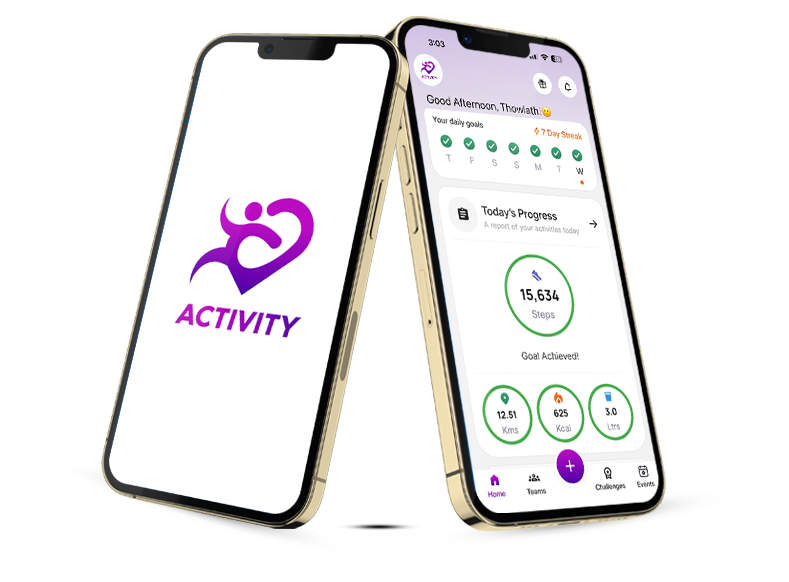
What Is a Running Tracker App?
A running tracker app is a mobile application that helps users record running activities and monitor relevant performance information. Depending on its features, it may measure distance, duration, steps, estimated calories burned and other running-related metrics.
Running trackers are useful for beginners establishing a jogging routine, recreational runners monitoring distance and individuals preparing for running events.
Some applications provide advanced performance analysis, while others focus on straightforward activity records and personal goals.
ACTIVITY App supports running as part of its everyday activity tracking experience, combining movement records with fitness challenges, distance goals and running event participation.
How Does a Running Tracker App Work?
Running tracker apps collect movement information using smartphone sensors, GPS or supported wearable devices.
The tracking method depends on the application.
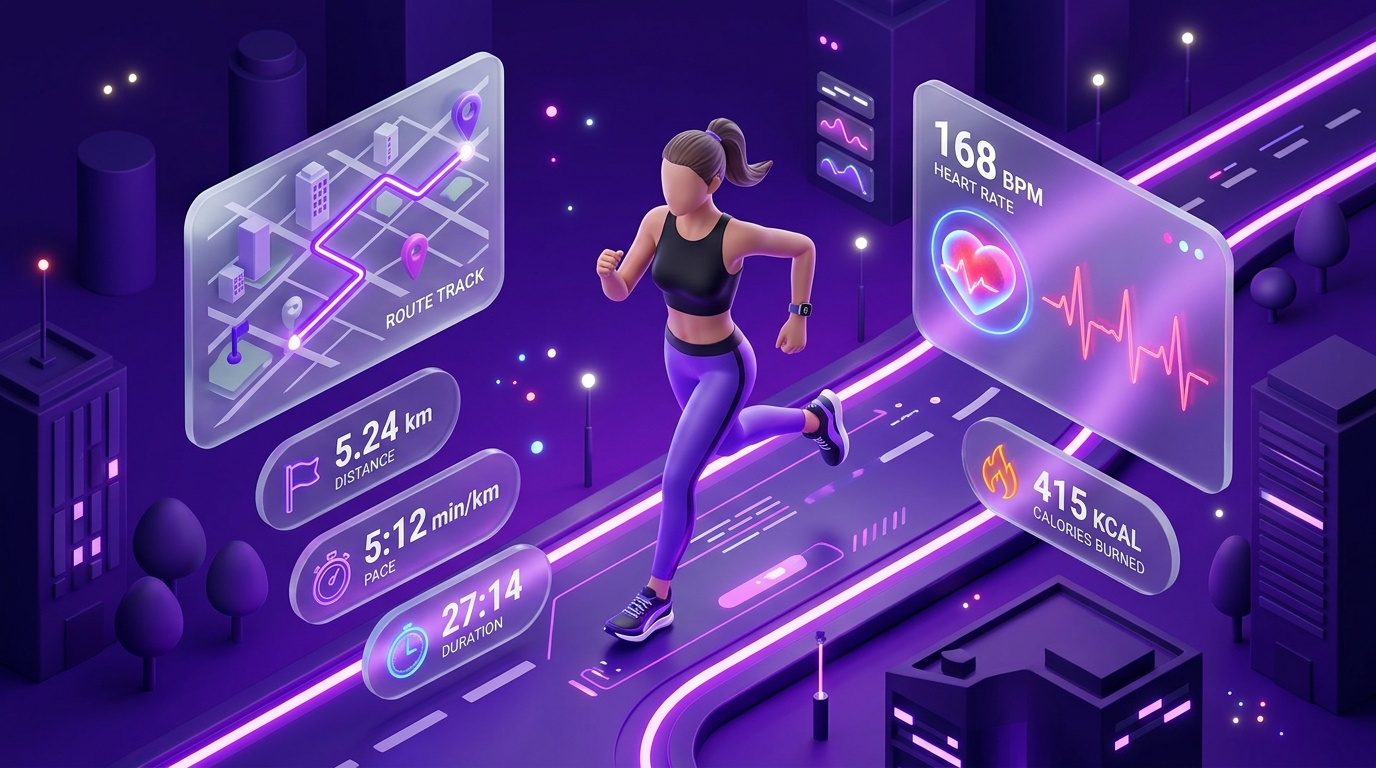
GPS-enabled running trackers can estimate outdoor routes and distances, while sensor-based systems can identify movement and calculate steps.
Some applications combine these information sources to provide additional activity measurements.
A typical running tracking process includes:
Activity recording:
The app detects or receives information about running movement.
Distance measurement:
Supported tracking methods estimate the distance covered.
Progress monitoring:
Users review relevant activity totals and progress towards goals.
Activity history:
Available records help runners understand changes over time.
ACTIVITY App provides running-related activity tracking through its step, distance and estimated calorie measurements.
Its additional challenge and community features allow users to connect running activity with broader fitness participation.
What Running Metrics Should You Track?
Different running measurements provide different information about a run.
The most useful metrics depend on whether you are beginning to run regularly, increasing distance or working towards a particular event.
| Running metric | What it helps you understand |
|---|---|
| Running distance | Approximate distance covered |
| Running duration | Time spent completing a run |
| Running pace | Average time taken to cover a kilometre |
| Running speed | Distance covered per unit of time |
| Step count | Steps recorded during movement |
| Estimated calories burned | Approximate energy expenditure |
| Running frequency | How regularly running activities are completed |
Not every running tracker supports every measurement.
For example, ACTIVITY App focuses on daily steps, distance and estimated calories burned, while dedicated performance-focused running applications may provide pace charts, route maps or advanced training analysis.
For recreational runners, basic activity measurements can be sufficient to follow distance-related goals and maintain awareness of regular movement.
How Can a Running Tracker Help Beginners?
Starting a running routine can be easier when activity is recorded consistently.
A running tracker allows beginners to observe their movement without relying entirely on memory.
For example, someone beginning with short jogging sessions may want to understand how frequently they run and whether their distance changes over several weeks.
Tracking provides a reference for reviewing those changes.
Establish a starting point
Begin with a comfortable combination of walking and jogging, based on your current abilities.
Focus on manageable distances
Choose short running sessions rather than immediately attempting long distances.
Record regular activity
Use a running tracking app to monitor supported movement measurements.
Review progress gradually
Notice whether you can complete similar activities more comfortably or maintain a regular schedule.
Adjust your routine
Increase activity according to comfort, recovery and experience.
ACTIVITY App allows users to follow daily movement and personal activity goals, making it an option for beginners who prefer straightforward tracking with additional motivational features.
Understanding Running Distance and Pace
Distance and pace are two commonly used measurements in running.
Running distance represents how far someone travels during an activity, usually measured in kilometres.
Running pace indicates the average time required to cover one kilometre.
For example, a runner completing 3 kilometres in 21 minutes has an average pace of 7 minutes per kilometre.
| Distance | Duration | Average pace |
|---|---|---|
| 2 km | 14 minutes | 7 min/km |
| 3 km | 21 minutes | 7 min/km |
| 5 km | 35 minutes | 7 min/km |
Pace is useful for comparing running sessions, but it should be interpreted alongside distance, terrain, effort and other conditions.
Someone running on a hilly route may record a slower pace than on a flat path, even when their effort is similar.
ACTIVITY App supports distance tracking. Runners who require detailed pace analysis should confirm that their chosen tracking tool provides those specific measurements.
How to Build a Consistent Running Routine
Running consistency develops through an approach that suits individual fitness levels and schedules.
A useful routine does not necessarily involve running every day.
For beginners, alternating running with walking and allowing adequate recovery may be more manageable.

Choose suitable running days
Select times when you can exercise without unnecessary time pressure.
Begin with comfortable sessions
A short jog or run-walk combination can provide a starting point.
Maintain a manageable effort
Running at a comfortable intensity can help beginners avoid excessive fatigue.
Allow recovery
Rest or lower-intensity days give the body time to adapt to activity.
Review your running records
Compare how regularly you run and whether your chosen distances remain comfortable.
A running tracker app can help organise relevant activity information and provide a clearer view of progress.
ACTIVITY App adds personal goals and streaks that users can follow alongside their everyday movement.
The objective is to establish a routine that supports continued participation rather than achieving the same result every day.
How to Track Your Running Progress Over Time
Running progress can take several forms.
Some runners want to increase the distance they can comfortably cover. Others may focus on developing a more regular routine or improving performance over a familiar route.
Useful ways to evaluate progress include:
Distance development:
Review whether you can comfortably complete longer runs.
Activity consistency:
Observe how frequently you participate in running activities.
Effort and comfort:
Notice whether familiar distances feel easier over time.
Personal milestones:
Recognise achievements such as completing a first continuous run or reaching a distance goal.
Long-term patterns:
Compare activity across several weeks instead of focusing on one session.
For example, completing a 3-kilometre run more comfortably after several weeks may represent progress even if the recorded distance remains unchanged.
ACTIVITY App allows users to follow supported movement and distance records, helping connect everyday activity with personal goals.
How Can Running Challenges Support Your Goals?
Running challenges provide an organised target beyond an ordinary running session.
They may involve completing a particular distance, maintaining activity over a period or participating alongside other runners.
For example, a recreational runner might choose a distance-based challenge to encourage regular activity throughout a month.
ACTIVITY App offers daily and distance-based fitness challenges that can complement a running routine.
Users can follow eligible activity progress, participate in supported challenges and view rankings where available.
These activities introduce an additional form of motivation without requiring runners to follow a competitive training programme.
Challenge targets should always be appropriate for individual running abilities.
Can You Track Running Activity With Friends?
Running can be an individual activity, but some people enjoy sharing their progress with friends, colleagues or running communities.
Group participation can provide opportunities to exchange encouragement and celebrate achievements.
ACTIVITY App's Teams feature allows users to create groups, view activity records and follow shared progress.
For example, friends who run at different times may still participate in a collective activity goal.
Similarly, a workplace running group may use shared activity records to encourage voluntary participation.
Team features can make running more social without requiring everyone to follow the same route, pace or schedule.
How Can Running Trackers Support Event Preparation?
Running events provide participants with defined distance goals and opportunities to apply their preparation.
A running tracker can support this process by helping users monitor regular activity and understand the distances they are completing.
For example, a runner interested in a 5K event may use distance records to follow their progress towards completing that distance comfortably.
Longer events generally require more structured training, suitable recovery and additional preparation.
ACTIVITY App connects everyday activity tracking with marathon and running event participation through its RUN ID and Marathon Hub.
Users can explore supported events and access participation-related information within the platform.
Visit the ACTIVITY Marathon Hub to learn more about available running events.
Event registration procedures and official timing arrangements depend on the organiser.

What Should You Look for in a Running Tracker App?
The right running tracker depends on the type of running you do and the information you want to record.
Consider these features before choosing an application.
| Feature | Why it matters |
|---|---|
| Running distance tracking | Helps monitor how far you run |
| Activity records | Provides information about completed movement |
| Personal goals | Supports distance and activity targets |
| Progress summaries | Helps review performance over time |
| Running challenges | Offers structured activity goals |
| Event participation | Connects users with organised running opportunities |
| Device compatibility | Ensures the app works with supported devices |
| Privacy controls | Helps users understand data permissions and sharing |
Runners interested in everyday movement, distance goals and fitness challenges may find ACTIVITY App relevant.
Those who need advanced training features, such as interval splits, cadence analysis or detailed pace charts, should look for applications that explicitly support those capabilities.
Common Running Tracking Mistakes to Avoid
A running tracker provides information, but understanding how to use that information is equally important.
Increasing distance too quickly:
Rapid changes in running volume can increase discomfort and injury risk.
Focusing only on pace:
Speed is not the only indication of running progress.
Ignoring recovery:
Rest is important for adapting to physical activity.
Comparing different routes:
Hills, surfaces and weather conditions can influence results.
Depending entirely on calorie estimates:
Estimated energy expenditure is not an exact measurement of effort.
Overlooking device limitations:
Distance and movement records may vary depending on sensors and tracking conditions.
Running through pain:
Persistent or worsening pain should not be ignored simply to complete a target.
Running records are most useful when combined with realistic goals and attention to physical comfort.
Frequently Asked Questions About
Running Tracker Apps
Explore ACTIVITY App Videos
Learn smart tracking, interactive challenges and community engagement through quick, motivational video demos.
Join Fun Fitness Challenges
One Simple Action: Walking
Making Walking a Habit
Conclusion
A running tracker app can help individuals record running activity, monitor distance and understand progress towards personal goals.
Whether you're beginning with short jogging sessions, developing a regular running routine or preparing for an event, useful tracking information can make your activities easier to review.
ACTIVITY App combines everyday activity tracking with personal goals, distance challenges, community participation and running event access.
Explore ACTIVITY App to discover how running and everyday movement can become part of a more engaging fitness routine.